
Last updated November 21, 2026
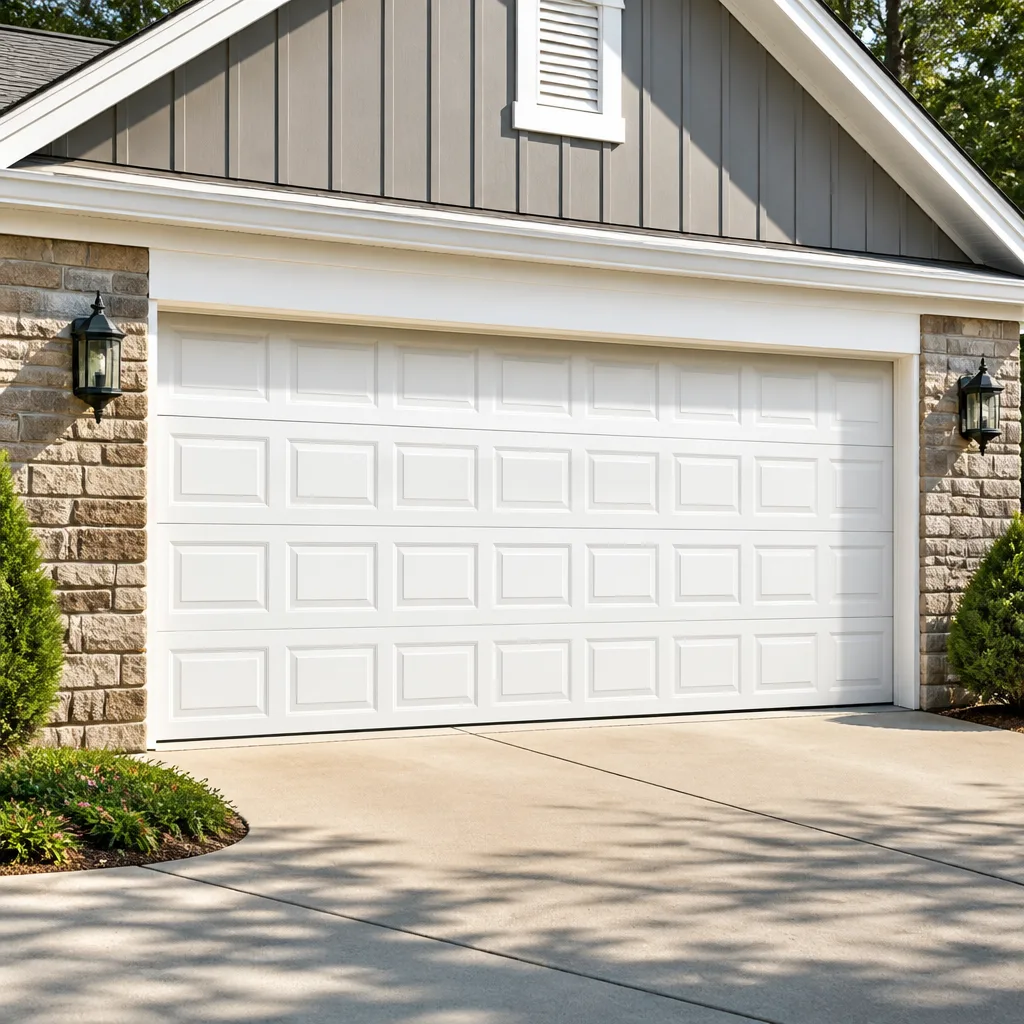 Raised-panel steel
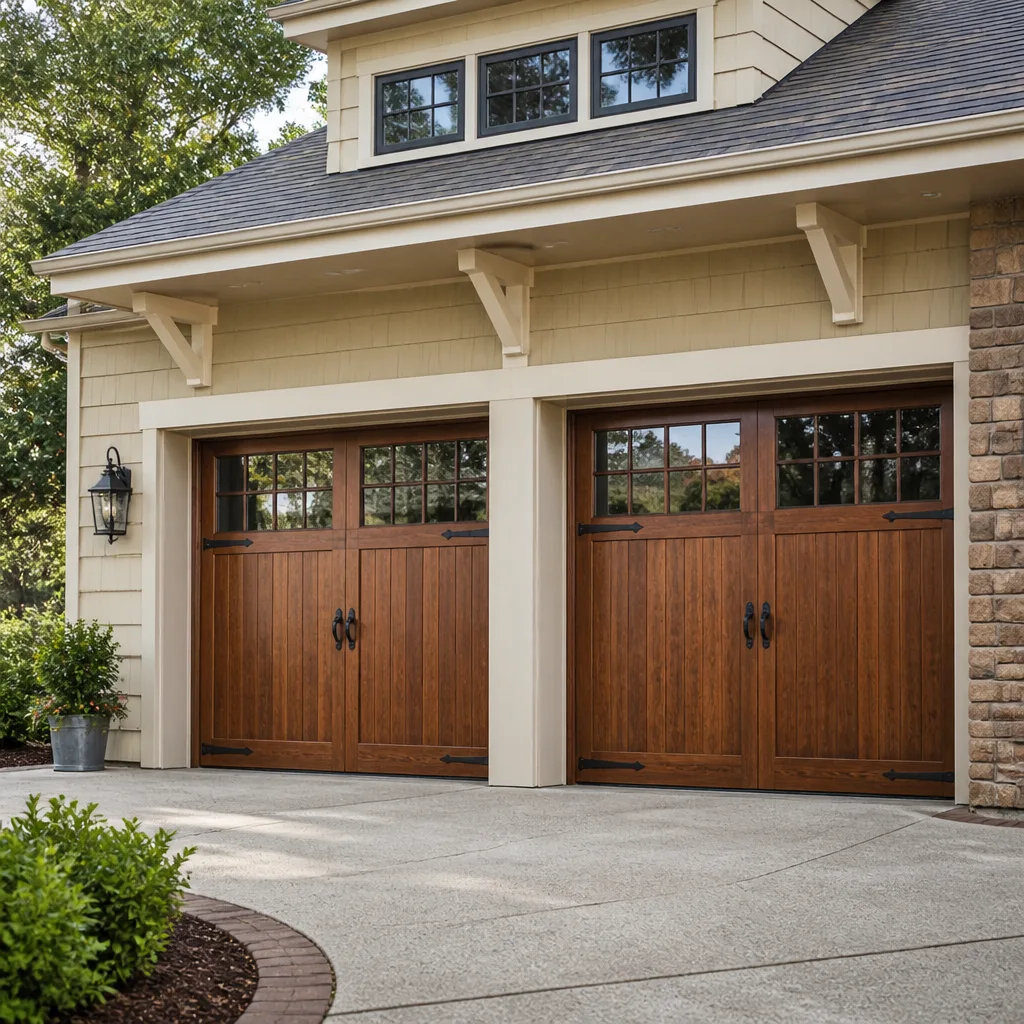 Carriage house
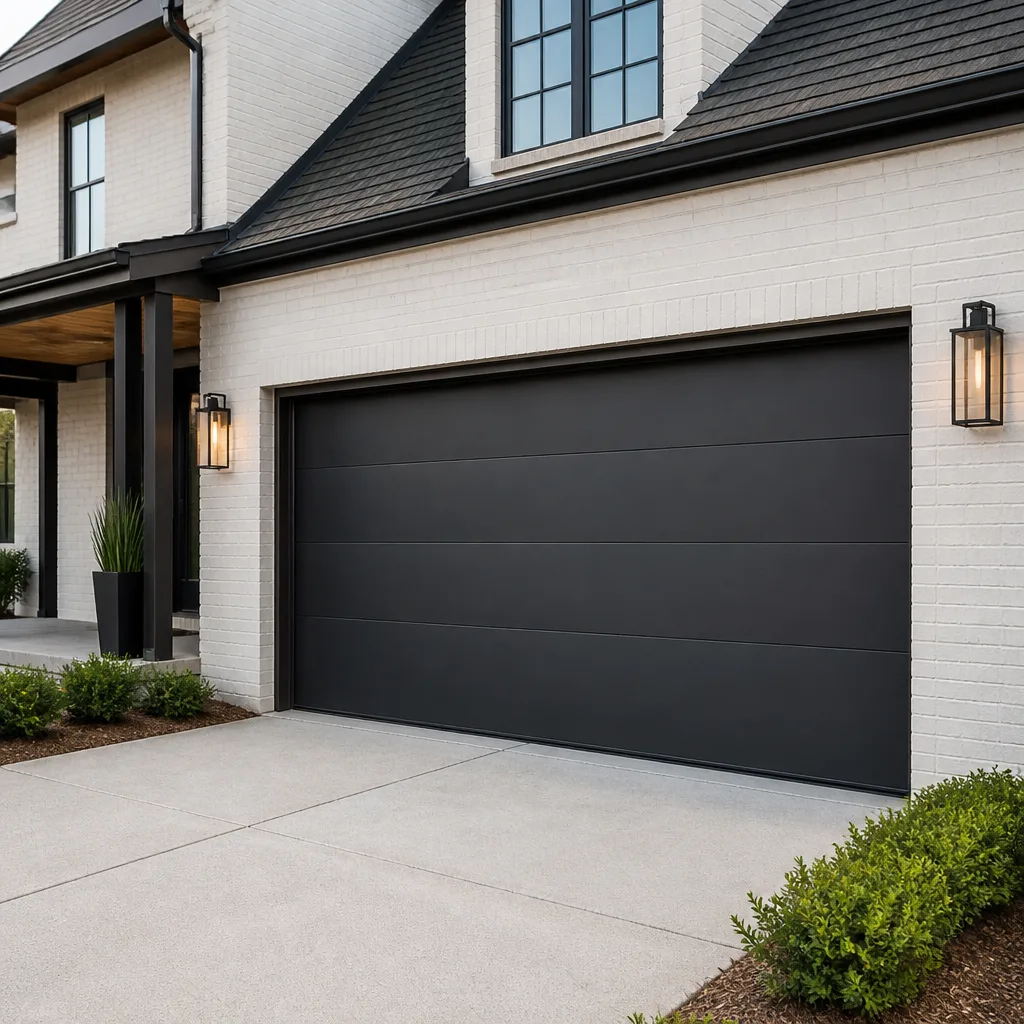 Modern flush
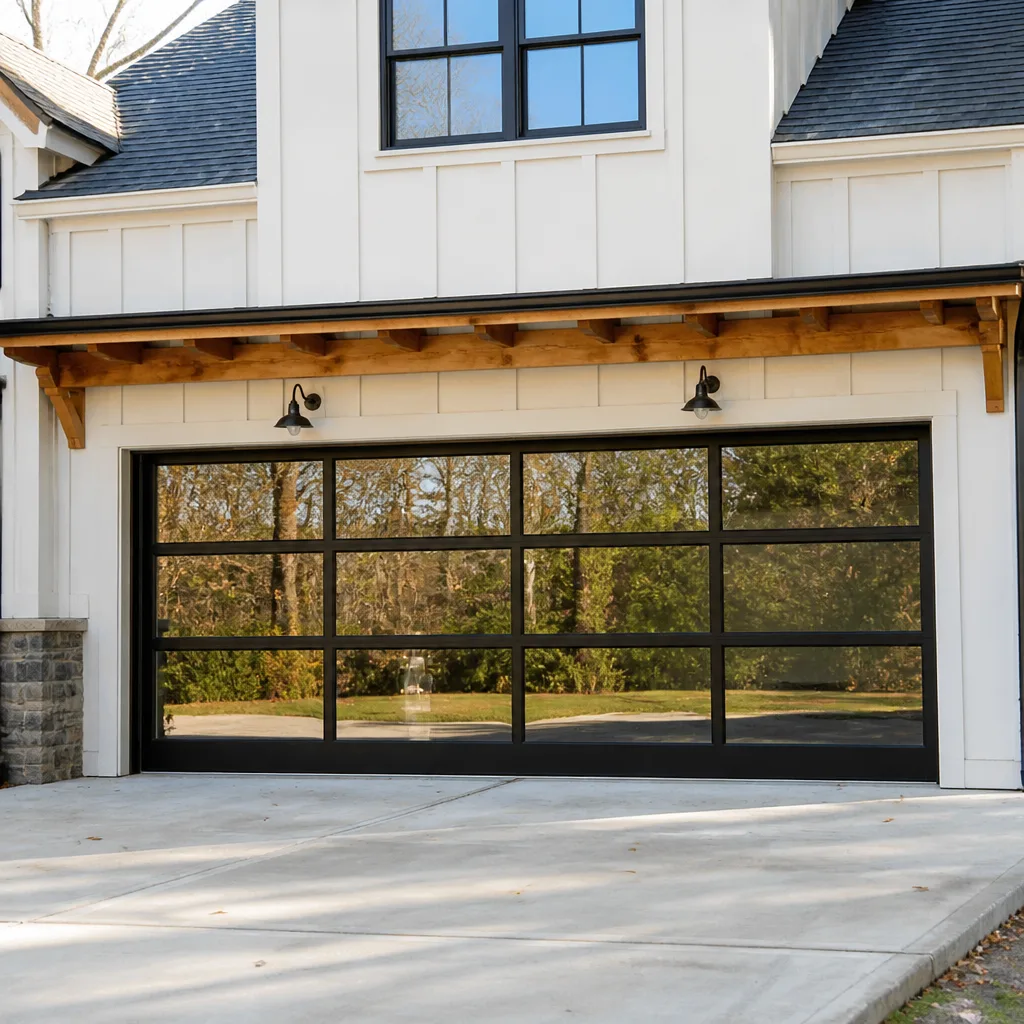 Full-view glass
 LiftMaster openers
 Chamberlain openers
Full 25-point door and opener safety check with every visit - springs, cables, rollers, tracks, and your LiftMaster or Chamberlain opener included
You get a price before we start. It does not change when the pro arrives.
Get your free estimateDIY vs Professional Garage Door: The The Woodlands Homeowner’s Decision Guide
Most guides treat the DIY versus professional question as a matter of confidence. They imply that a handy homeowner with enough patience and a good tutorial can handle almost anything, and that calling a pro is really about convenience. That framing gets people hurt. Torsion springs store enough energy to cause serious injury when they release, and that release can happen in a fraction of a second with no warning. The real question isn’t whether you’re capable. It’s whether the specific task in front of you has a risk profile a homeowner should accept. This guide draws that line task by task, so you know exactly which jobs in a The Woodlands garage are safe to take on and which ones belong with a specialist.
Quick Answer
Some garage door work is genuinely safe for a careful homeowner: weatherstripping, lubrication, photo-eye alignment, and programming a new opener remote. The work that involves stored mechanical energy or structural load – torsion and extension springs, cables, track realignment, and panel repair – should go to a trained technician every time. A professional garage door specialist handles the dangerous work, and you keep the simple maintenance.
Styles & brands we work with
- Raised-panel steel
- Carriage house
- Modern flush
- Full-view glass
- LiftMaster openers
- Chamberlain openers
Table of Contents
- Where the Real Line Sits Between DIY and Professional
- What a Homeowner Can Safely Do (And How to Do It Right)
- What Requires a Technician (And Why)
- The Tools and Knowledge Gap Nobody Warns You About
- The Real Cost of a DIY Attempt That Goes Wrong
- HOA, Warranty, and Insurance Considerations in The Woodlands
- How The Woodlands Climate Affects Your Door
- When to Call a Professional
- Frequently Asked Questions
Where the Real Line Sits Between DIY and Professional
The dividing line isn’t skill. It’s stored energy and structural load. A task belongs on the DIY side when a mistake leads to a door that doesn’t close, an opener that doesn’t respond, or a draft you can feel. A task belongs on the professional side when a mistake can release a spring, drop a door panel, or send a cable whipping across the garage.
Think about what each system actually holds. A torsion spring on a standard residential door is wound under heavy tension and anchored to a shaft above the opening. That tension is what balances a door that might weigh a few hundred pounds. When the spring is intact, the system is stable. When someone who hasn’t done the job before tries to unwind or rewind it without the right tools and the right sequence, the stored energy has to go somewhere. The same is true of extension springs, which stretch along the tracks and can snap back toward the opener rail if the safety containment isn’t right.
Cables carry the door’s weight in tension alongside the springs. Track alignment controls how the rollers travel. Panels are structural, not decorative; a bent bottom section can throw the whole door out of square and stress the opener. None of these are forgiving systems.
Here in The Woodlands, we see the full range: doors on homes in Alden Bridge and Cochran’s Crossing, older doors near Grogan’s Mill, newer builds in Creekside Park with high-cycle openers. The mechanics are the same across all of them. The line between safe and unsafe work doesn’t move based on the neighborhood.
- Safe for most homeowners: weatherstripping, lubrication, photo-eye adjustment, remote and keypad programming, visual inspection.
- Technician territory: torsion springs, extension springs, cable replacement, track realignment, panel replacement, opener gear and logic board repair, and any full garage door installation.
What a Homeowner Can Safely Do (And How to Do It Right)
There’s real value in handling the simple maintenance yourself, and we’d rather you do these tasks correctly than skip them. None of the jobs below involve stored spring energy or structural load. Each one makes the door quieter, keeps it sealing against The Woodlands humidity, or fixes a common opener annoyance.
Lubrication
Apply a garage-door-specific lubricant to the hinges, rollers, and the spring coils themselves, not to the tracks. Tracks should stay clean and dry so the rollers don’t collect grit. Wipe the tracks down with a damp cloth and leave them bare. Lubricating the tracks attracts dust and eventually gums up the rollers.
Weatherstripping and Bottom Seal
The rubber seal along the bottom of the door and the trim around the frame are what keep hot, humid air, rain, and insects out. A brittle or torn bottom seal is easy to replace: raise the door, pull the old seal out of its channel, and slide in a new one cut to length. Frame weatherstripping nails or screws into the jamb and takes about an hour. In a climate where the door faces summer heat and afternoon storms, a good seal also keeps conditioned air where it belongs.
Photo-Eye Alignment
The two small sensors near the bottom of the tracks must see each other. If the door reverses for no reason or refuses to close, check that the lenses are clean and aimed at each other. A gentle adjustment of the bracket usually fixes it. This is one of the most common service calls we take, and it’s genuinely a homeowner job.
Remote, Keypad, and Smart Programming
Pairing a new remote or setting a keypad code is a matter of following the opener’s manual. On a Chamberlain or Genie unit the sequence differs slightly, which is exactly why the manual matters. If you’re adding a smart hub or a phone app, the same rule applies: use the manufacturer’s instructions for that specific model.
Visual Inspection
Once a month, stand in the garage and look. Check the springs for visible gaps or rust, the cables for fraying, the rollers for flat spots, and the hinges for wear. You’re not fixing anything here. You’re catching a problem before it becomes a breakdown. If something looks wrong, that’s your signal to stop and call. You can read more about what a proper look-over covers on our garage door repair page.
What Requires a Technician (And Why)
These are the jobs where a mistake can injure you, damage the door beyond economical repair, or both. We’re not going to walk you through these steps, because the risk isn’t worth it and a written procedure can’t substitute for the physical experience of feeling how a spring behaves under load.
Torsion and Extension Springs
This is the one that matters most. A torsion spring is wound and anchored to hold tension; releasing that tension wrong can send the winding bars flying or snap the spring with force. Extension springs have their own failure mode, and if the containment cables aren’t set right, a broken spring can come back toward the opener. Spring replacement requires specific winding bars, correct knowledge of how many turns a given spring needs, and proper anchor hardware. This is high-skill work, and it’s the service that separates a garage door specialist from a general handy-person. If your spring is broken, stop using the door and call for The Woodlands Garage Door Repair Co spring service.
Cable Replacement
Cables are under the same tension as the springs and lift the door’s full weight. A cable that’s frayed or off its drum can’t be reattached safely by hand. Replacement means releasing spring tension first, replacing the cable, and re-tensioning the system correctly.
Track Realignment
A door that’s jumped the track or hangs crooked is a structural problem, not an alignment tweak. Bent or misaligned track means the door is binding, which strains the opener and can bend panels. Track work requires knowledge of how the door should sit square in the opening.
Panel and Structural Repair
A dented panel is cosmetic. A panel that’s bent at the hinge, cracked, or pulling away from the stiles is structural. Replacing a section means matching the profile and color, and for a Clopay or Amarr door that means getting the right model. We see plenty of doors in The Woodlands that need a matched panel after a minor bump, and getting the match right the first time saves a second call.
Opener Internal Repair
Gear sets, logic boards, and drive assemblies inside the unit aren’t homeowner territory. That’s the kind of work that belongs with a brand-trained technician on garage door opener repair. Our technicians have up to 8 years of experience working across LiftMaster, Chamberlain, Genie, Clopay, Amarr, Wayne Dalton, Craftsman, and Raynor systems.
The Tools and Knowledge Gap Nobody Warns You About
A tutorial shows you a spring and a set of bars. It rarely shows you the whole picture. Here’s what a real spring job actually involves beyond the spring itself, and where the gap between a video and a safe repair lives.
- The right springs. Springs are matched to the door’s weight, height, and cycle life. The wrong wire gauge or length produces a door that’s hard to lift, strains the opener, or fails early. Getting the match right requires measuring and knowing what the door needs.
- Winding bars and anchor hardware. These are purpose-made tools. Substituting a screwdriver or a pipe is how people get hurt. The anchor bracket and center bearing also need to be in good condition, and a tutorial rarely tells you to inspect them.
- Torque knowledge. How many turns a spring needs depends on the door and the spring. Guessing produces either a door that won’t stay up or one that slams down.
- Cable and drum condition. A spring replacement on old, frayed cables does not solve the problem. A trained eye checks the whole system at once.
- Balance and travel adjustment. After any spring work, the door must be balanced and the opener’s travel limits reset. This is a second set of steps the video usually skips.
We keep garage door parts directly on hand, which is part of why we can diagnose and complete a repair in one visit rather than leaving a homeowner waiting on a third-party supplier. That operational difference matters when your door is stuck open and the garage is your only way in or out.
One more truth about the gap: a tutorial is made by someone who’s done the job many times, and it hides the hundreds of little decisions that come from repetition. Watching someone do it well isn’t the same as having done it. There’s no substitute for a technician who has worked the same system dozens of times and knows how it should feel. From the spring to the opener to the panel, that whole-system view is what a specialist brings.
The Real Cost of a DIY Attempt That Goes Wrong
When people compare DIY to professional service, they usually compare the price of a part to the price of the repair. That comparison leaves out something important: what happens when the DIY attempt fails. We’ve seen this play out many times, and the pattern is consistent.
A homeowner attempts a spring replacement on a Saturday. The new spring is the wrong weight, or the winding goes wrong, or the door comes down hard and bends a panel. Now the repair is bigger than it started. Instead of one spring service, the job is spring replacement plus panel replacement plus possibly new cables that got stretched when the door dropped. Instead of a single visit, it’s a diagnostic visit and a repair visit on different days. The homeowner paid for the part twice and the labor twice.
That’s the real math. The DIY saving on a spring job is the difference between a part and a full repair. The downside is a repair that costs more than the original job plus an unsafe door you can’t use in the meantime. For weatherstripping and lubrication, the downside is a minor inconvenience. That’s the difference between a task worth doing yourself and one that isn’t.
Here in The Woodlands, the stakes go up a little because so many garages are attached to the house and face the street. A door that’s stuck or crooked is visible to the whole neighborhood, and a panel that doesn’t match is obvious. For a homeowner in Sterling Ridge or Panther Creek, a botched repair that leaves the door misaligned is one more call to make it right.
Pricing for garage door work in The Woodlands is set per job by a written estimate. For a broken spring, that’s typically a targeted repair. For a door that needs structural work because a DIY fix went sideways, the range can climb quickly. Either way, the written estimate sets the final price before any work starts, so you know what you’re agreeing to. A free estimate costs nothing and tells you exactly where you stand.
HOA, Warranty, and Insurance Considerations in The Woodlands
The Woodlands has a well-earned reputation for coordinated architecture and community standards, and that affects garage door decisions in ways people don’t always anticipate. If you’re a homeowner here, a few practical points are worth checking before you start modifying anything.
- Exterior changes may need approval. If you’re replacing a door or changing its color, style, or panel type, check your community association’s architectural guidelines first. Many The Woodlands neighborhoods review exterior modifications, and a new door profile should match what’s approved.
- Warranty terms can hinge on installation. A new door or opener warranty often has conditions about professional installation and proper adjustment. If you install a Clopay or Amarr door yourself and something fails, the manufacturer may point to installation as the cause. Ask about warranty terms before you buy.
- Insurance cares about function, not brand. A garage door that won’t close properly leaves the house unsecured. Your homeowner’s policy won’t care whether the door is a LiftMaster or a Genie – it cares that the home’s main vehicle and pedestrian entry point functions. A door that’s been compromised by a failed repair is a concern for anyone insuring the home.
- Structural changes deserve documentation. If you’re replacing panels or springs, keep the receipt and the model information. It matters if you ever sell or make a claim.
None of this means a homeowner can’t touch the door. It means the decisions around the door involve more than the mechanics. Wiring or structural changes that aren’t documented can complicate a future sale in a community where exterior details are watched. A quick call to your association is the practical step.
How The Woodlands Climate Affects Your Door
The Woodlands is warm and humid for much of the year, and that shapes what wears out first. Heat and moisture work on the door’s seals, hardware, and opener electronics in predictable ways, and knowing the pattern helps you decide what to tackle yourself.
Weatherstripping takes the brunt. Sun on the door face and humidity in the air make the bottom seal brittle faster than in a drier climate, which means the seal needs checking and often replacing every few years. That’s a straightforward homeowner job. Frame trim and the corner seals also degrade, and replacing them is worth doing before a gap lets insects or rainwater into the garage.
Hardware tolerates the humidity differently. Hinges, rollers, and track bolts pick up surface corrosion over time if they aren’t lubricated. A monthly lubrication routine keeps them moving and extends their life. Left alone, they stiffen, which makes the opener work harder.
The springs themselves aren’t damaged by humidity the way the seals are, but the door’s balance can drift as seals and rollers wear. If your door starts to feel heavy or the opener strains, get it looked at rather than ignoring it. In a climate where the garage sees real summer heat, the opener also works near its limit, which is why a failing unit shouldn’t be pushed further. Ask about your specific model, whether it’s a LiftMaster, Chamberlain, or Genie, so the fix matches the equipment.
The Woodlands sits in a region where afternoon storms are part of the seasonal rhythm. A door that seals well and tracks cleanly handles rain and wind better than one that’s been letting things slide. That’s the quiet benefit of a little routine maintenance.
When to Call a Professional
Call a professional when the task involves stored energy, load, or structure – torsion springs, extension springs, cables, track realignment, panel and structural repair, and any internal opener failure. Call when your door has started moving unevenly, when the opener strains or reverses unexpectedly, when a spring is visibly broken, or when a cable is off its drum. Call when you’re not sure which category a problem falls into, because a wrong guess on a garage door can cost more than a service call. The Woodlands Garage Door Repair Co offers free estimates in The Woodlands – call (855) 812-9394. We answer 24/7, and fast dispatch from 7am to 7pm, Sunday through Friday. Door not working and not sure why? A quick call gets you a straight answer.
Frequently Asked Questions
No. Garage door springs are held under heavy tension, and releasing that tension incorrectly can cause serious injury. A trained technician uses the correct winding bars, matches the spring to the door’s weight, and checks cables and hardware in the same visit. Call (855) 812-9394 for a free estimate on a spring repair.
Weatherstripping and bottom seals, lubrication, photo-eye alignment, remote and keypad programming, and monthly visual inspections are all safe homeowner tasks. These jobs skip the stored-energy and structural systems where the real risk lives. If a job escalates into springs, cables, or tracks, stop and call.
Yes. Warm, humid air and sun on the door face wear out the weatherstripping faster than in drier climates, and humidity encourages corrosion on hinges and rollers. A yearly seal check and monthly lubrication handle most of it. A door that suddenly feels heavy usually means the balance has shifted and the hardware needs a look.
It can. Door and opener warranties often include terms about professional installation and proper adjustment, and a failed part after a DIY attempt may be attributed to installation. Check your specific product’s warranty terms before you start. This is especially relevant for Clopay and Amarr doors and for opener electronics.
Often more than a professional repair would have. A failed spring replacement can bend a panel, stretch cables, or knock the door out of balance, which turns a single spring job into a multi-part repair in multiple visits. The written estimate for a proper repair sets the final price in advance, so you know the cost before any work begins. Call (855) 812-9394 for an exact quote – estimates are free.
Often, yes. Many repairs, including spring replacement and opener fixes, can be completed the same day when the needed parts are available. We keep garage door parts on hand to speed things up. Call (855) 812-9394 to find out what’s possible for your door.
It depends on your community. Many The Woodlands neighborhoods review exterior modifications, including door style and color, so check your association’s guidelines before ordering. Getting approval first avoids a problem later. For a replacement, ask about the door profile and finish during your garage door installation estimate.
See the difference
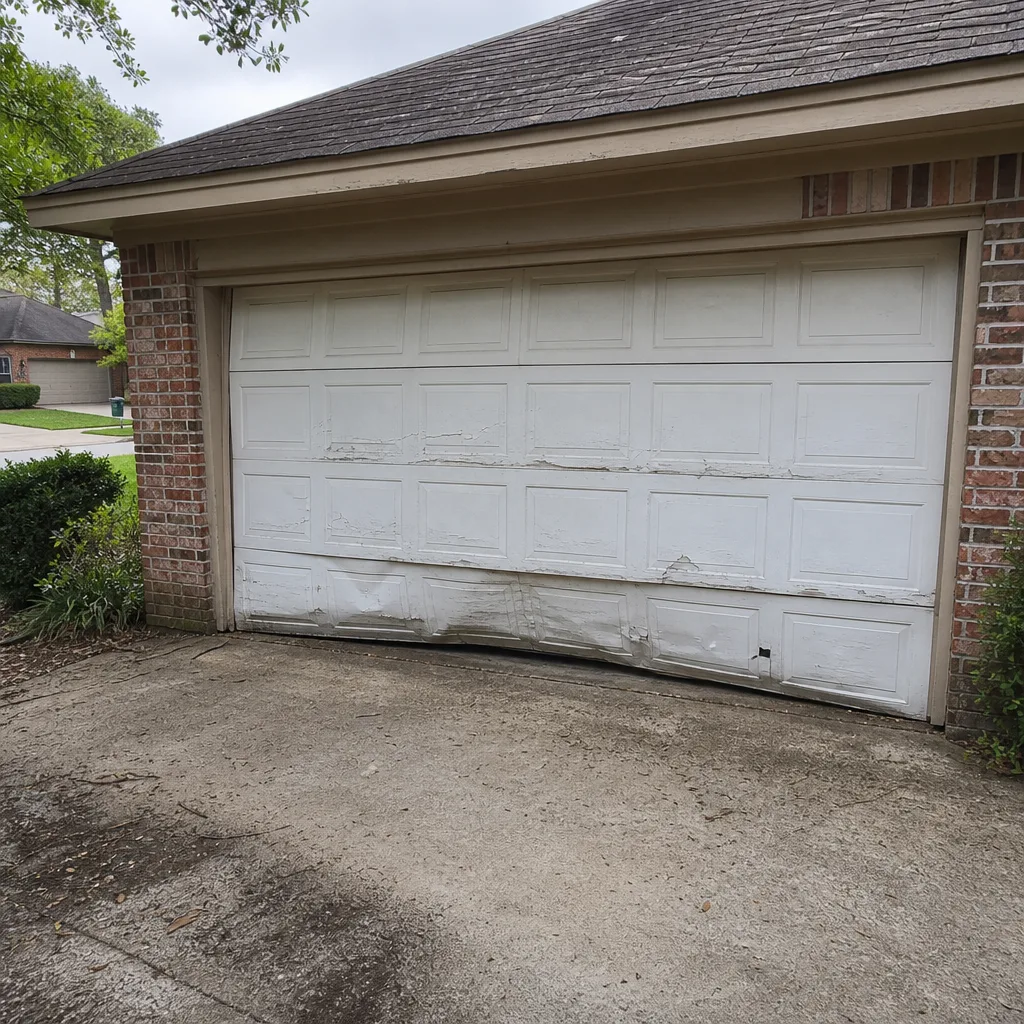 Before
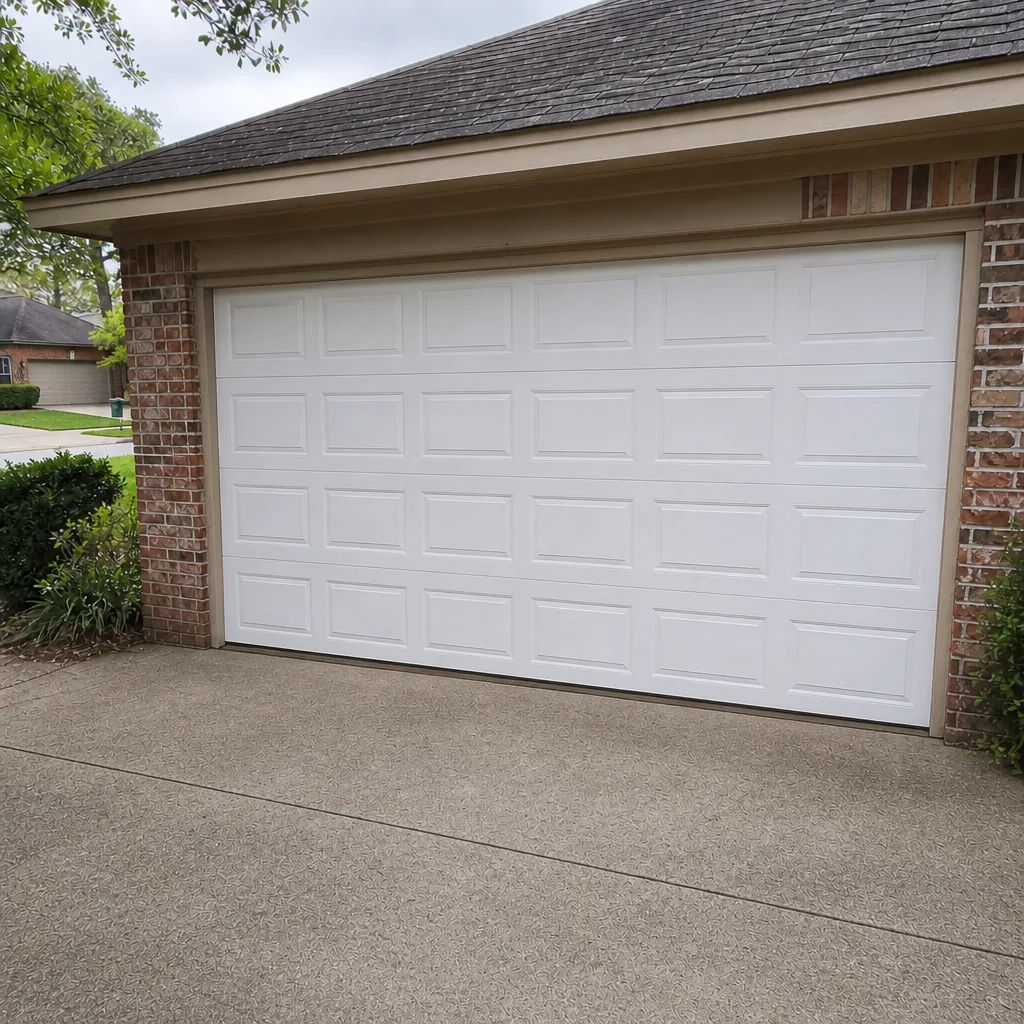 After
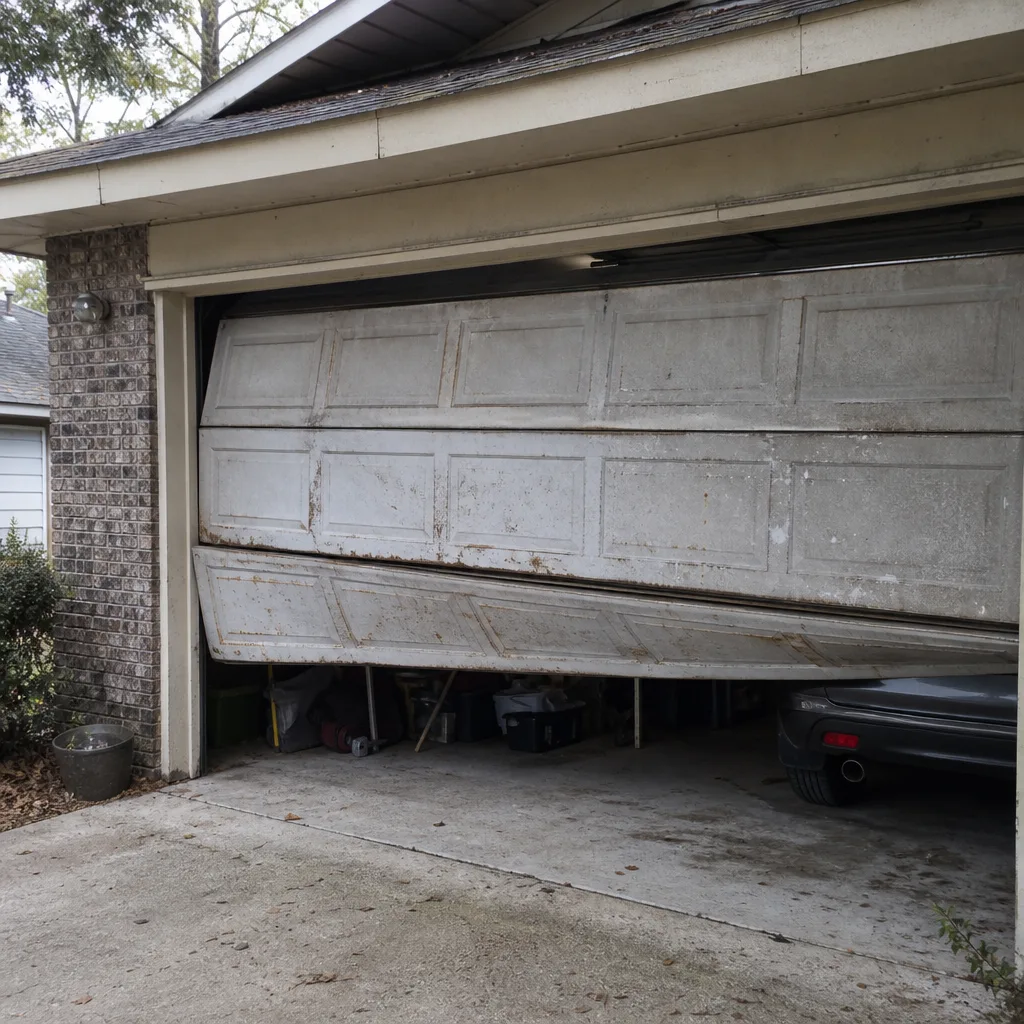 Before
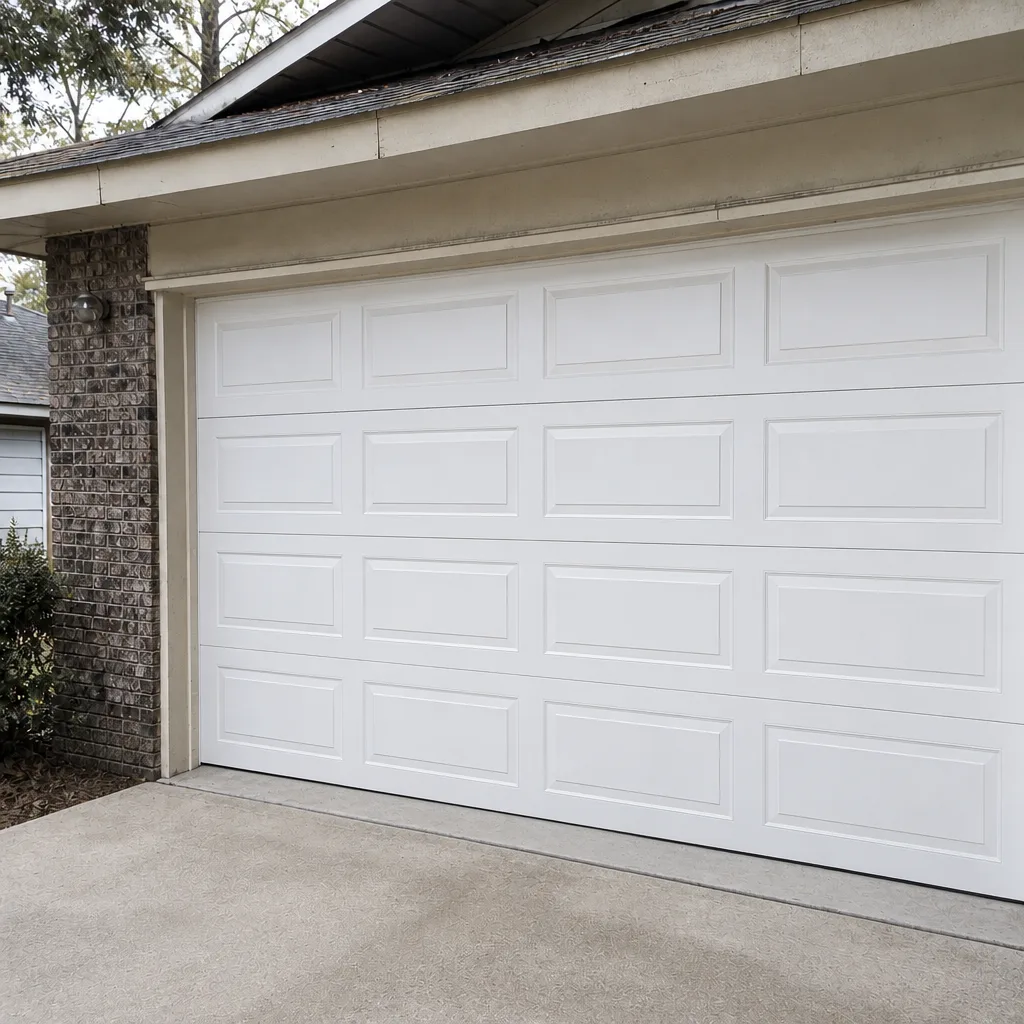 After
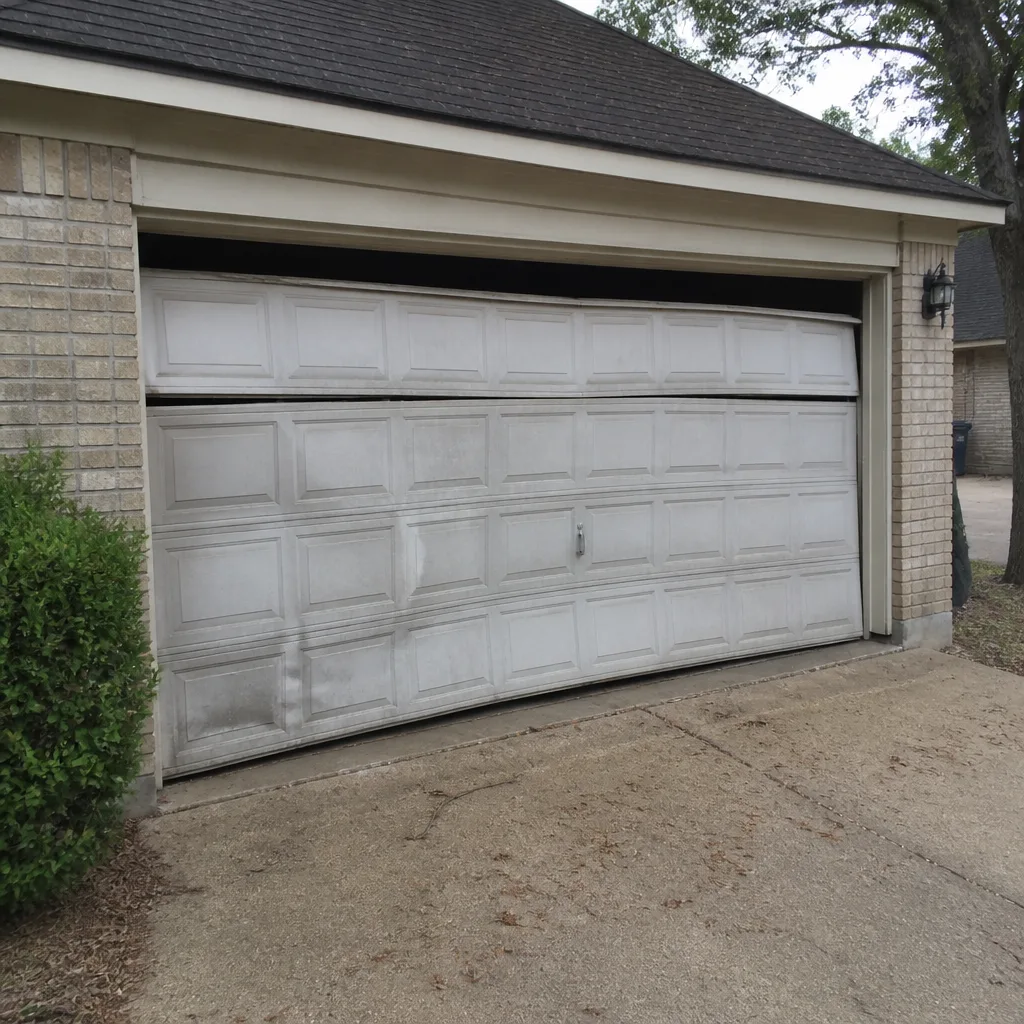 Before
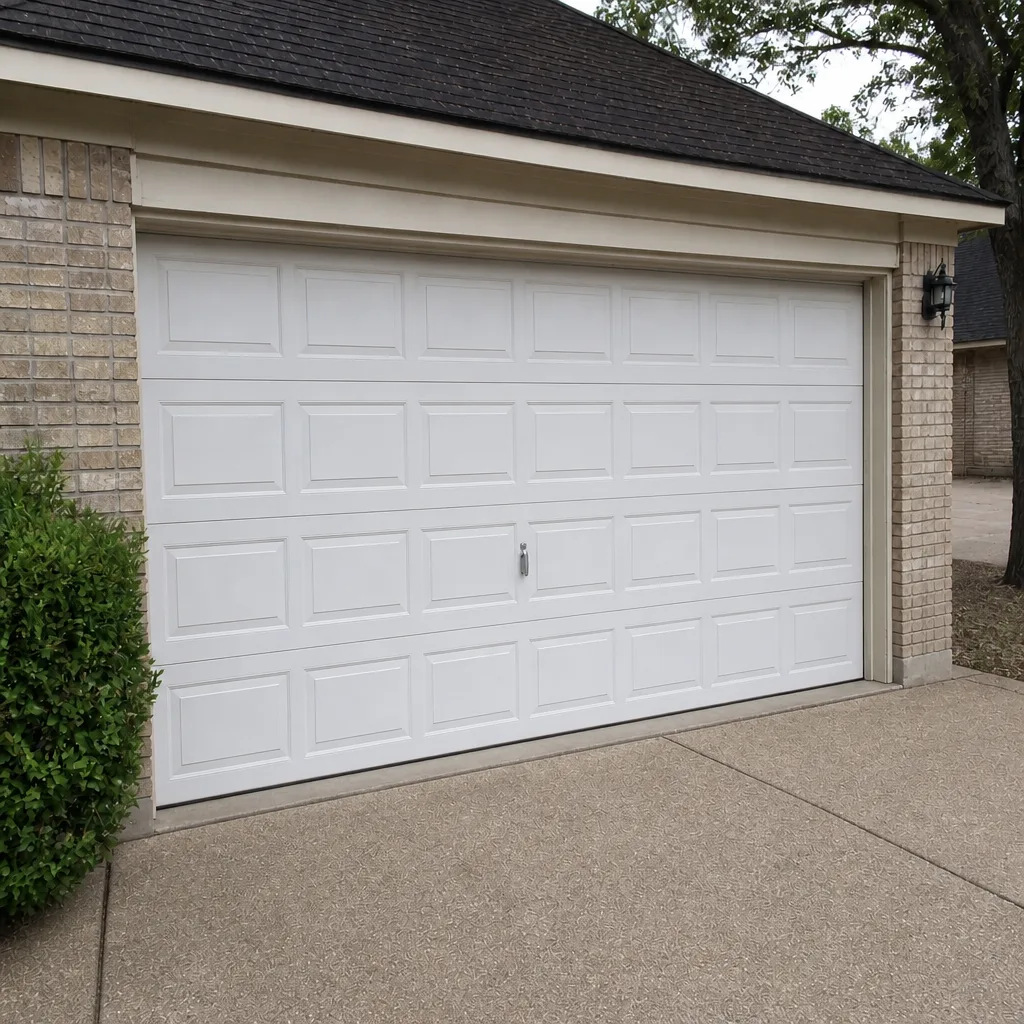 After
Common Mistakes to Avoid
- Trying to relieve spring tension yourself. The most dangerous mistake on the list. A wound spring holds energy no tutorial can prepare you to manage, and the wrong move can send a winding bar or a broken spring across the garage.
- Ignoring a broken spring and running the opener anyway. A broken spring means the opener is lifting the entire door weight. That strains the unit and can burn out the motor or strip the gear. Stop using the door and call for repair.
- Lubricating the tracks. Tracks should stay clean and dry so rollers don’t collect grit. Grease on the tracks turns into a sticky mess and makes the door harder to operate, not easier.
- Buying a spring without matching the door. Springs are sized to the door’s weight and height. The wrong one leaves the door unbalanced and prone to early failure, and it can strain the opener.
- Skipping the association check before a door replacement. In The Woodlands, exterior changes may need community association approval. Ordering a door that doesn’t match the guidelines costs you time and money.
- Fixing one part and ignoring the rest. Replacing a spring on worn cables or a worn drum leaves the system vulnerable. A proper repair looks at the whole door, from the spring to the opener to the panel.
- Letting a small alignment issue drag on. A door that’s drifted out of alignment binds on the tracks, which strains the opener and can bend panels over time. Small problems are cheap to fix. Bent panels aren’t.
The Bottom Line
The DIY versus professional line on a garage door comes down to risk, not skill. Weatherstripping, lubrication, sensor alignment, and programming are genuine homeowner jobs, and doing them well keeps the door quiet and sealed. Springs, cables, tracks, panels, and internal opener work belong with a technician because the risk of injury or a much larger repair is real. Comparing a part price to a repair price misses the cost of a failed DIY attempt, which often exceeds the repair that was needed in the first place. Get it right the first time, keep the simple maintenance yourself, and call for the rest.
Garage doors are all we do, and every dollar of our expertise is pointed at them, from the spring to the opener to the panel. If you’re in The Woodlands and you’re not sure which side of the line your problem falls on, call (855) 812-9394 for a free estimate. We answer 24/7, with fast dispatch from 7am to 7pm, Sunday through Friday. If your issue is clearly a repair, our garage door repair service and garage door opener repair team can help, and when it’s time for a new door, we handle garage door installation as well. Estimates are free, the price is set in writing before any work starts, and we’re glad to tell you honestly whether you can safely do the job yourself.
Written by the team at The Woodlands Garage Door Repair Co.